Reflection on Psalm 104
By Sophie Sutherland
‘It is only through shadow that one comes to know the light.’ Catherine of Siena
Out in the garden and in the woods and fields around our house flowers and leaves are pushing their way out into the light. Bluebells are showing glimpses of colour in the sunnier clearings. The hedgerows and copses dazzle with emerging green foliage and the pink and white may-blossom. For many people this glorious unfurling is a wonderful visual reminder of the new life we celebrate in this season as we remember Jesus bursting from the tomb that first Easter.
As I watch this process year by year I’m always reminded of the ancient creation hymn, Psalm 104, which speaks (v 30) of God renewing the face of the earth through his Spirit. Each morning when I look out of the window and see things a little more advanced I imagine the invisible hand of God’s Spirit moving through the garden in the night. The Psalm gives an intricate bird’s eye view of God’s work of sustaining and renewing creation day by day, year by year, providing food and shelter for every kind of creature great and small, through the constant cycle of seasons, life and death. Very appropriately it’s often used as part of daily prayer in the 40 day Easter Season to remind us of that much more extraordinary act of renewal or new creation represented by Christ’s resurrection.
But in recent days another aspect of the psalm has struck me especially and that is that it does not shy away from the darker side of creation: not only the chaos waters, but Leviathan, the sea monster, the darkness of night and young lions roaring for prey are all to be found here. And that fits perhaps with our experience of creation now – as we enjoy the brilliance and beauty of spring each day there’s also been a shadow in the background, like a sombre dream that lingers in daylight. It’s impossible to forget the suffering in our midst. Of course, suffering and fear are there in our world in any season or year, but right now it is perhaps even harder to escape them.
But what is encouraging in the Psalm is that there is no part of creation where God is not present. The Psalm bears similarities to the Egyptian hymn to the Aten – the Sun God worshipped during the reign of Akhnaten. But there is one very striking difference. The sun-god is not present or active at night. By contrast, the God of Psalm 104 is not only present in the darkness, his creative, regenerative power is at work within it. Indeed it is under cover of darkness that some of his creatures flourish and feed. It is hard to imagine any darkness greater than that of Calvary on Good Friday – not just the darkness which fell upon the whole land, but the darkness of sorrow, rejection and separation and yet paradoxically this is the moment when God intervened and acted powerfully and decisively in our world in a way that would change it forever defeating all that threatens and hurts us.
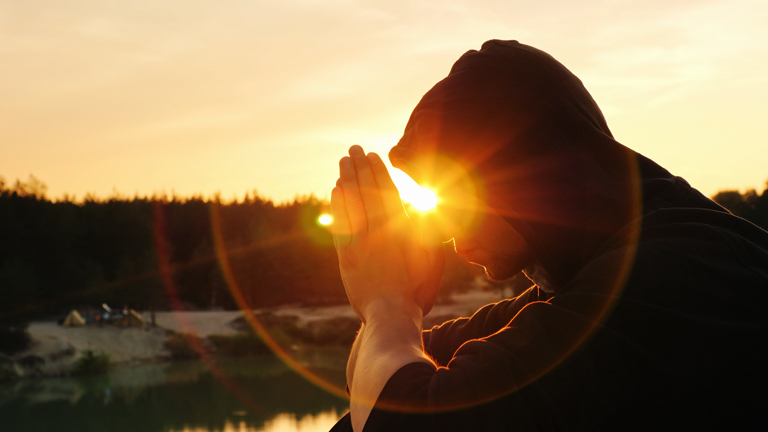
The brilliance of the Easter dawn is only possible because of the profound darkness of Good Friday. Of course when we look at the world around we still see plenty of suffering and hurt and situations and situations we long for God to change and the contrast with the beauty around us in Spring throws those painful places into even sharper relief. We are living in between times – the work of God’s Kingdom which began with Jesus’ life and death continues and we are called to be part of it. But what we can be sure of is that there is no place where the restoring hand of God’s Spirit cannot reach. When we witness the Spirit’s work in the transformation of our gardens, we can know just as surely that it is present also in the hands of the doctors and nurses, the efforts of researchers, the tears and loving prayers of anxious friends and relatives. Indeed perhaps in realising that God is at work even in the darker places in creation and the darker moments of these strange times that we appreciate even more fully the glory and the beauty of the light of Eastertide.